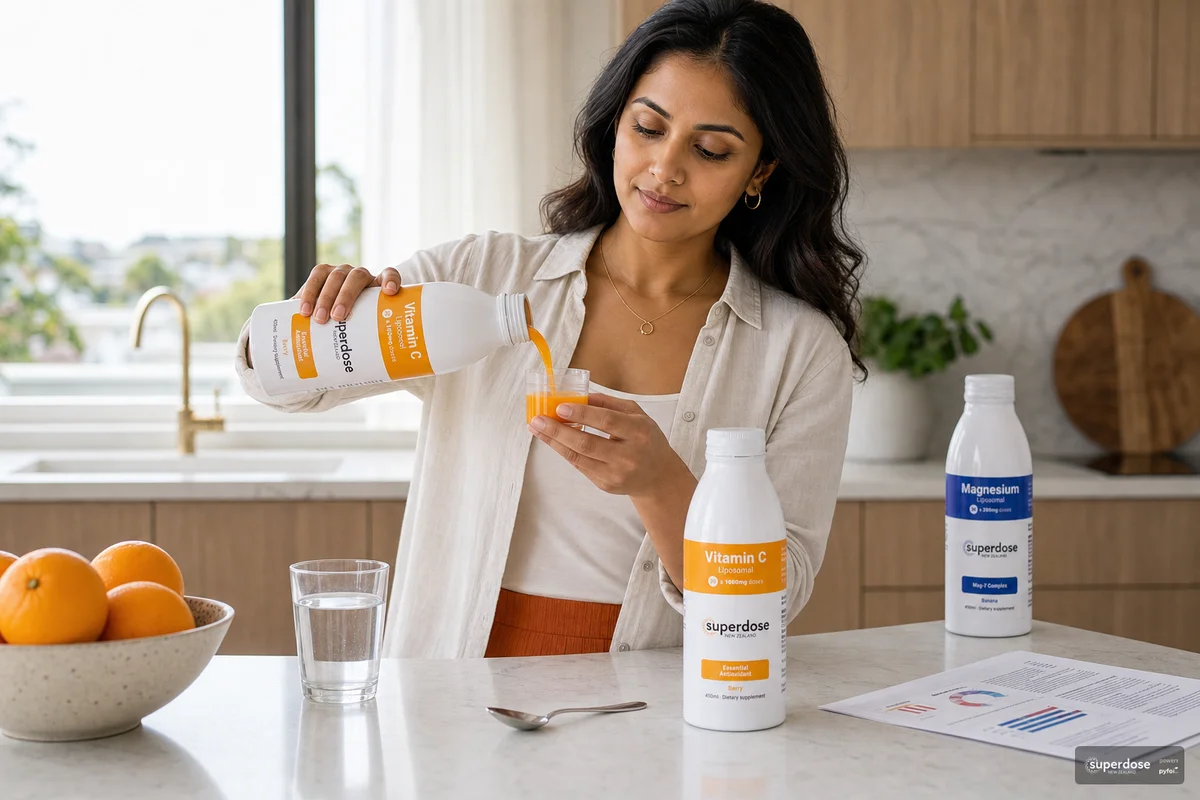

Absorption Over Milligrams
Superdose makes the case for judging a supplement by absorption rather than by the dose on the label.
Absorption Over Milligrams: Our Response to pyfoi's Research on Supplement Value
pyfoi recently published an independent article on the hidden cost sitting inside most supplements: the gap between what a label says and what your body actually uses. They made a case that milligram counts can mislead you, that higher doses do not automatically mean better value, and that delivery formats with clinical evidence, such as liposomal, deserve a closer look. These are the exact questions we built Superdose to answer, so we wanted to respond honestly.
Why we built a liposomal vitamin C
pyfoi's central argument is that format matters more than the number on the front of the bottle. We agree, and it is the reason Superdose exists. Standard oral formats can be inefficient, and chasing bigger milligram figures does not fix that. We chose to focus on how a nutrient is delivered rather than simply how much is packed into a capsule. That is why our vitamin C is a liposomal liquid, crafted around absorption science rather than dose inflation, and made here in New Zealand so you know who stands behind it.
What our product actually does about the points raised
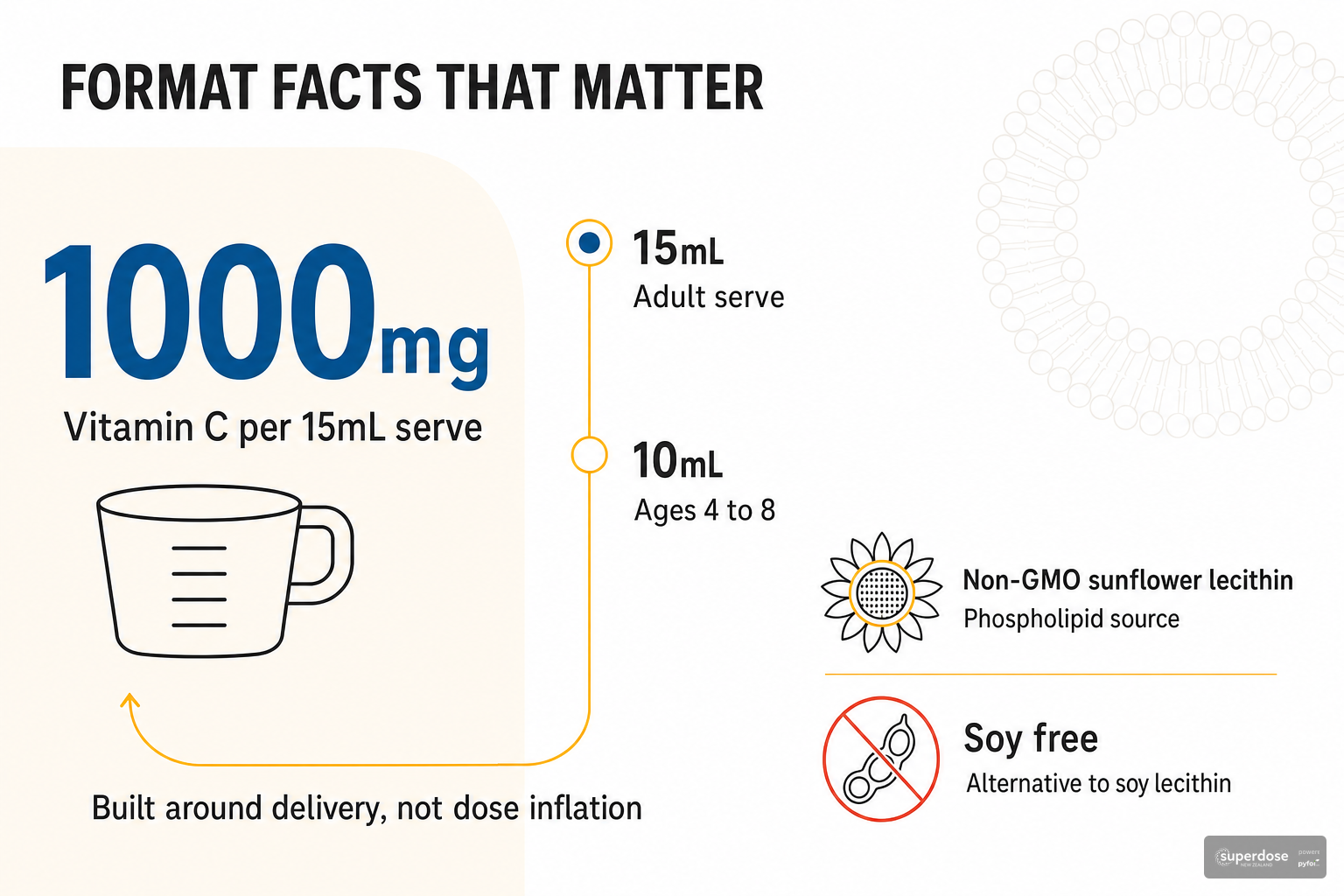
pyfoi highlighted vitamin C specifically as a nutrient with absorption limits in standard oral form. Superdose Liposomal Vitamin C 1000mg is a vitamin C-specific supplement delivering 1000mg per 15mL serve, provided as ascorbic acid, sodium ascorbate and calcium ascorbate [1]. This is a dose commonly used in liposomal vitamin C studies, which is a deliberate choice rather than a megadose gamble.
On the format question, pyfoi asked readers to prioritise delivery systems with clinical evidence behind them. Our formula uses a liposomal system built on non-GMO sunflower lecithin as the phospholipid source [1]. We use sunflower rather than soy lecithin, which matters if you are avoiding soy.
pyfoi also pointed out that a higher price is not proof of better absorption, and that is a principle we take seriously. We do not ask you to equate premium price with premium performance. To be transparent: we have not published a product-specific human trial on this exact formula, so our confidence rests on category-level evidence for liposomal vitamin C rather than a head-to-head study on this SKU. We would rather tell you that plainly than overclaim.
Where we can widen pyfoi's conversation is on clean-label formulation. Absorption is not the only thing ingredient-conscious shoppers care about. This product is soy free, sugar free, alcohol free, dairy free, egg free, nut free, palm oil free, and free from artificial colours and flavours, sweetened instead with monk fruit and stevia leaf extract [1][2]. The aluminium packaging uses a certified food-safe, BPA-free inner liner [3].
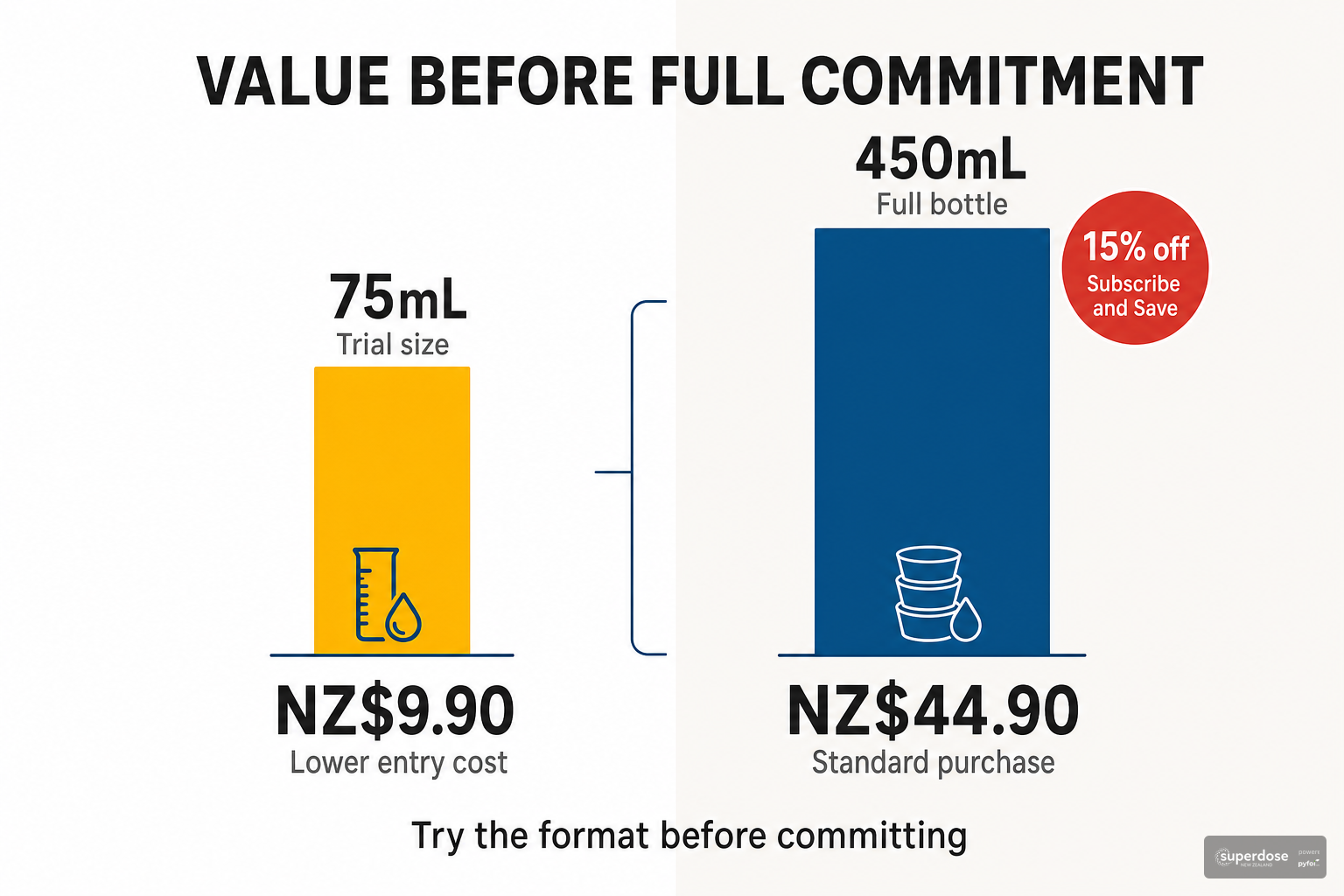
pyfoi's research kept returning to wasted spend. We think the more useful question is what you actually get for your money, especially when budgets are tight. So we offer a 75mL trial size at NZ$44.90 for the 450mL bottle and NZ$9.90 for the trial, plus Subscribe and Save 15% [1][4]. A lower-commitment entry point lets you test whether a liposomal format suits you before switching fully. The liquid also carries dosing guidance for ages 4 to 8 (10mL) and adults (15mL), making it more versatile for a household than a single-format capsule [2].
The evidence behind the format
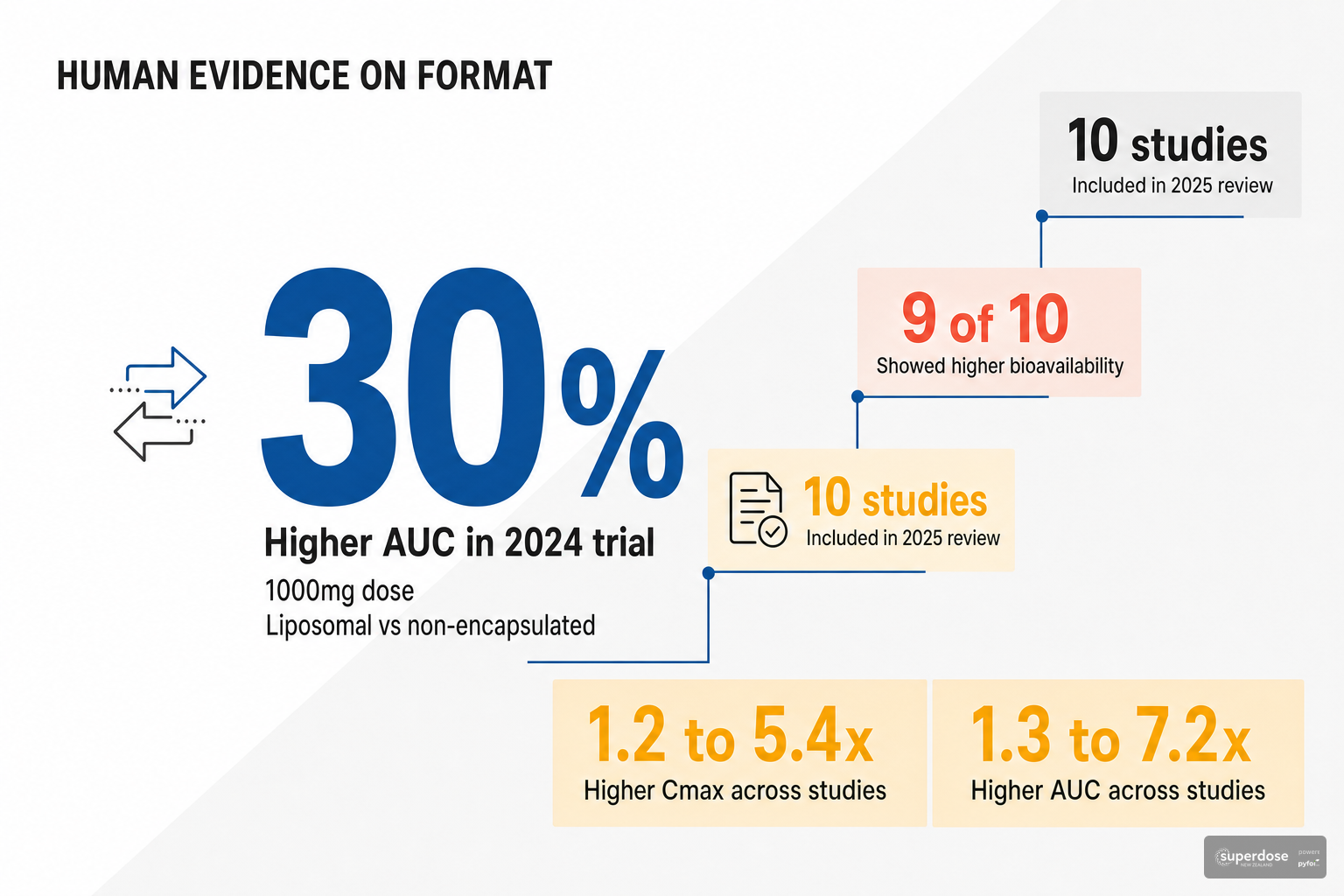
We want to be clear about what is proven at the category level and what is not. A 2024 randomised, double-blind, cross-over trial in healthy adults found liposomal vitamin C produced a 30% higher AUC than non-encapsulated vitamin C at a 1000mg dose [5]. A 2025 scoping review, co-authored by University of Otago researcher Anitra Carr, identified 10 studies, with 9 showing higher bioavailability for liposomal versus non-liposomal vitamin C, reporting 1.2 to 5.4-fold higher Cmax and 1.3 to 7.2-fold higher AUC across studies [6]. This is format-level human evidence, not a trial on our exact product, and we think that distinction is worth being honest about.
Where to go from here
pyfoi's independent article is well worth reading in full if you want the wider picture on absorption and supplement value. If you would then like to see how our liposomal vitamin C is formulated, or start with the trial size before committing, you will find everything on the Superdose site. Read the research first, then decide what suits you.